HITL Governance · Regulation · Talent Q
The Checkpoint Gap: Human Oversight Is Now the Law. Is Yours Real or Decorative?
Article 14 enforcement began this week. McKinsey finds only a third of organizations have governance mature enough for the agents they've already deployed, and workers themselves can't agree on what real oversight even looks like.
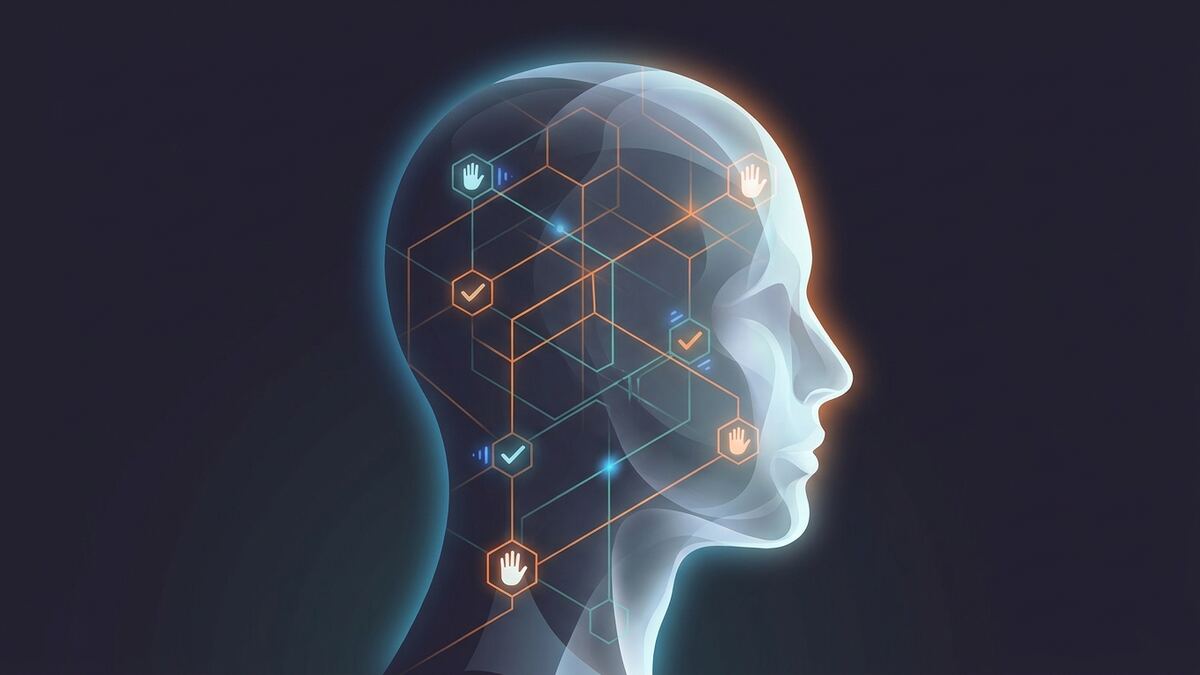
On August 2, 2026, the deployer obligations under Article 14 of the EU AI Act stopped being a compliance roadmap item and became enforceable law. Organizations running high-risk AI systems, including hiring tools, now have to show that a qualified person can actually understand, monitor, and override what the system does. Not a name on a policy PDF. A person who could stop it, and knows how.
Three days later, the harder question is not whether companies have a human-in-the-loop. Almost everyone will claim one. The question is whether that checkpoint does anything, or whether it is a rubber stamp wearing a compliance badge.
Interactive · 6 steps · ~90 seconds
The Checkpoint Test
Below is a real AI-assisted hiring workflow, broken into six steps. For each one, decide: can the AI decide alone, or does it need a human checkpoint? Your score is checked against how Article 14 treats consequential decisions about real people, and your pattern is compared to what U.S. workers actually believe about oversight.
1AI drafts the job requisition and screening questions.
2AI ranks and scores incoming applications against the job criteria.
3AI schedules interview times and sends confirmations.
4AI conducts a structured first-round interview and scores the responses.
5AI drafts a written summary of interview strengths and weaknesses for the hiring manager.
6AI recommends the final hire/no-hire decision.
What the Law Actually Asks For
Article 14 does not ask for a vague gesture toward accountability. It specifies capability: the assigned person must be able to recognize the system's limitations, watch for anomalies, resist automatically deferring to the AI's output, correctly interpret results, and override or refuse to use the system when warranted. Article 26 adds that deployers must give this responsibility to people with the competence, training, and authority to actually exercise it, not the nearest available manager.
For hiring specifically, that oversight has to attach to the moments where the system's output changes what happens to a real person: who advances, who gets rejected, who receives an offer. Scheduling logistics or a drafting assist do not carry the same weight as a rank, a score, or a recommendation that a hiring manager will act on without re-deriving it themselves. Regulators are not asking companies to slow down. They are asking companies to be able to prove, on request, exactly where a human's judgment entered the decision and what that judgment was capable of catching.
Most organizations already have someone positioned at that moment in the workflow. Fewer can say what that person was trained to look for, or whether they have ever actually overridden the system. A checkpoint nobody has used is indistinguishable, on paper, from a checkpoint that does not exist.
"A checkpoint that can't catch anything isn't oversight. It's a signature."
The Governance Maturity Gap
The law arrived ahead of the operating model. McKinsey's 2026 State of AI Trust survey, drawn from roughly 500 organizations with direct responsibility for AI governance, risk, or investment decisions, found the average responsible-AI maturity score rose to 2.3 in 2026 from 2.0 the year before. Progress, but nowhere near enough: only about one in three organizations reached a governance maturity level adequate for the autonomous agents they have already deployed. Security and risk concerns, not regulatory uncertainty, are the top-cited barrier to scaling further, reported by nearly two-thirds of respondents.
That gap matters more in hiring than almost anywhere else, because hiring is one of the use cases the AI Act's Annex III explicitly designates as high-risk. A screening model that ranks or rejects candidates is exactly the kind of system Article 14 was written for. Deloitte's 2026 Global Human Capital Trends research adds a workforce-side data point: only about one in five organizations report a mature governance model for autonomous AI agents at all, even as roughly three-quarters plan to deploy more agents within two years.
Workers Don't Agree on What Oversight Even Means
The governance gap is not only a leadership problem. It is also a definitional one. Connext Global's 2026 AI Oversight Report, surveying 1,000 U.S. adults who use AI in their day-to-day work, found just 17% believe workplace AI is reliable enough to run with minimal human involvement. The other 83% split almost evenly: 35% say reliability comes from AI paired with light review, and 35% say it requires AI paired with dedicated, ongoing human oversight. Nearly two-thirds expect the need for human review to increase from here, not shrink.
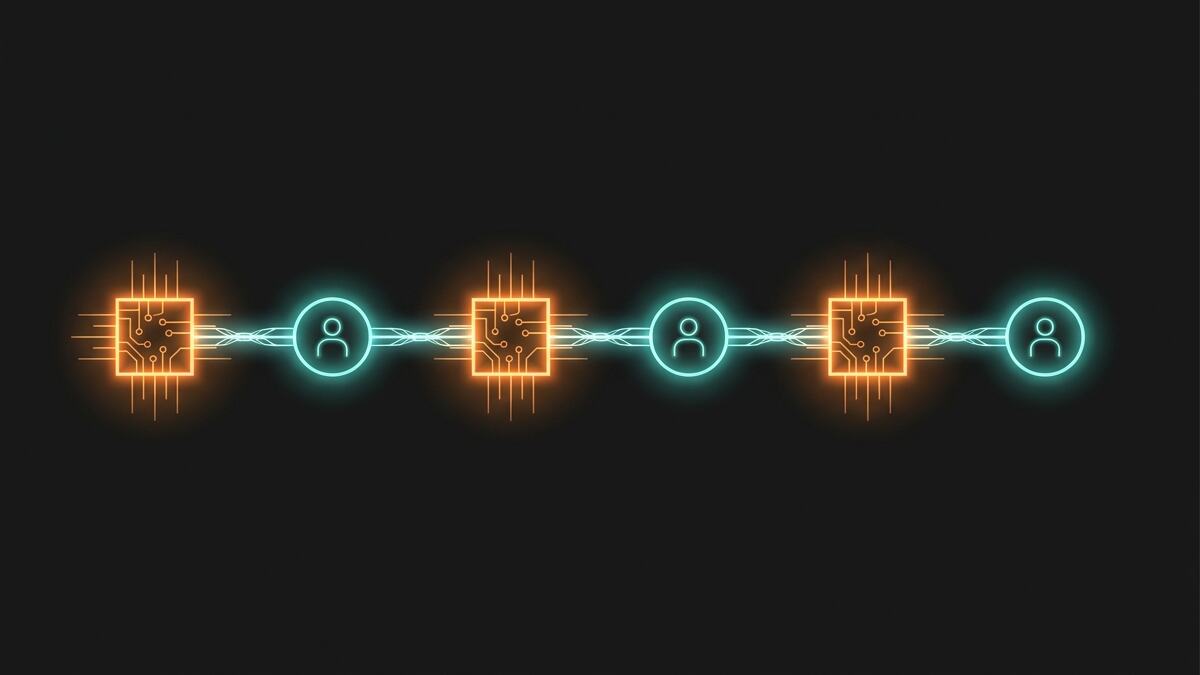
Put differently: most of the workforce already believes meaningful oversight is not optional. What they don't agree on, and what most companies haven't formally decided either, is where exactly the checkpoint belongs in the workflow, and what authority the person staffing it actually has. That ambiguity is precisely what Article 14 was built to close, and precisely what a rubber-stamp checkpoint fails to answer when a regulator, or a rejected candidate, asks for proof.
From Checkbox to Capability
The organizations closing this gap are not the ones with the most autonomous agents. They are the ones that redesigned the surrounding workflow: which decisions get a human checkpoint, what that person is trained and authorized to catch, and how that judgment gets documented so it survives an audit rather than a memory. Platforms like myndQ's hr.myndq.ai are built around exactly that structure, multi-round, human-in-the-loop AI interview and assessment workflows where the human sign-off is a designed step, not an afterthought, and where talent.myndq.ai gives candidates a verified, evidence-backed record instead of a résumé claim that neither an AI screener nor a compliance officer can actually check.
Article 14 will not be the last regulation to ask this question, and the answer will not get easier by waiting. More jurisdictions are converging on the same standard NIST's AI Risk Management Framework already describes for U.S. organizations: oversight that is trained, measurable, and provable, not assumed. The checkpoint gap closes one workflow redesign at a time, starting with an honest answer to where your own human-in-the-loop actually is, and whether it could catch anything if it needed to.
- DLA Piper GENIE, "Deployer obligations under the AI Act: Implications for employers from 2 August 2026"
- McKinsey & Company, "State of AI trust in 2026: Shifting to the agentic era"
- Connext Global, "The Connext Global 2026 AI Oversight Report"
- Deloitte, "2026 Global Human Capital Trends"
© 2026 Ariana.Digital. This brief reflects publicly reported information current as of publication and is provided for informational purposes; it is not legal, financial, or compliance advice. Regulatory dates and requirements should be verified with qualified legal counsel. Frontier AI with HITL utilized. If you find conflicts, DM the author asap.