AI Governance · Talent Q · Use Cases Q
The Oversight Rollback: Human Review of High-Risk AI Actions Just Fell to 25% — the Same Week It Became Law

On August 2, 2026, human oversight of high-risk AI systems stopped being a best practice inside the European Union and became a legal obligation. Under Article 14 of the EU AI Act, deployers of high-risk AI systems — recruitment and hiring tools explicitly among them — must now be able to show that a qualified person can understand a system’s limitations, monitor it for anomalies, correctly interpret its output, and override or stop it before a consequential action executes. Article 26 adds that this has to be a real, trained competence, not a name on a policy document.
The same week the deadline landed, a survey of 800 IT leaders put a number on what enterprises had actually been doing in the run-up to it. It was not building toward the law. It was moving the other way.
Interactive · Governance checkpoint simulator
Where would you require a human sign-off?
Below is a real AI-assisted hiring workflow, broken into six steps. For each one, decide whether a human needs to review and approve it before the system moves on. Then see how your calls compare to what the EU AI Act actually requires — and what companies are doing in practice.
0 of 6 answered
The Reversal Nobody Announced
JumpCloud’s Q3 2026 IT Trends Report found that the share of organizations requiring a human to review a high-risk AI action before it executes fell from 40% to 25% over the prior six months. Over the same stretch, the share running agents with full autonomy and zero human review more than doubled, from 11% to 26%. More than six in ten organizations now run AI agents in production, and those same organizations have adopted fewer than a third of standard AI governance and security practices between them — the adoption curve and the governance curve are no longer moving together.
None of this reads like deliberate resistance to Article 14. It reads like a workflow problem nobody solved in time: agent adoption scaled faster than anyone redesigned the review step to keep pace, so review got quietly skipped rather than formally removed. That distinction won’t matter to a regulator, and it won’t matter much to a candidate either.
Autonomy is scaling twice as fast as the governance built to check it.
What “Human Oversight” Is Actually Supposed to Look Like
Deloitte’s eighth annual State of AI in the Enterprise report — 3,235 business and IT leaders across 24 countries — found only 21% of organizations have a mature governance model for autonomous AI agents, even as agentic adoption is projected to surge from roughly a quarter of enterprises using agents moderately today to 74% within two years. Grant Thornton’s 2026 AI Impact Survey narrows in on the sharpest edge of that same gap: just 5% of organizations let an agent execute a high-stakes decision without human review at all, and 60% cap agents at moderate-risk automation only. Tellingly, 54% of COOs say they’re worried about regulatory and compliance uncertainty around agentic AI, against just 20% of CIOs and CTOs — the people closest to how these systems actually run are the least worried about the exact thing regulators are most focused on.
The World Economic Forum’s Future of Jobs Report 2025 gives a useful frame for how much ground is actually shifting underneath this. Employers currently route 47% of work tasks through humans alone, 30% through human-machine combination, and 22% through technology alone — and expect that split to move toward a near-even three-way division, roughly 33/33/34, by 2030. Article 14 isn’t asking companies to keep the human-only share high; that share is shrinking regardless. It’s asking them to be explicit and provable about which slice of the combination and technology categories still has a person positioned to catch and reverse a bad outcome before it reaches someone.
The same pattern shows up anywhere agentic autonomy is scaling, not just in hiring. Research on physical AI — autonomous systems in manufacturing, logistics, and defense — describes a deliberate phase-in: agents are allowed to observe and recommend before they’re allowed to act, building a track record before autonomy expands. The workflows that treat oversight as structural rather than occasional are the ones surviving contact with both regulators and real failure. Hiring is just the version of this question most people will personally sit across a table from.
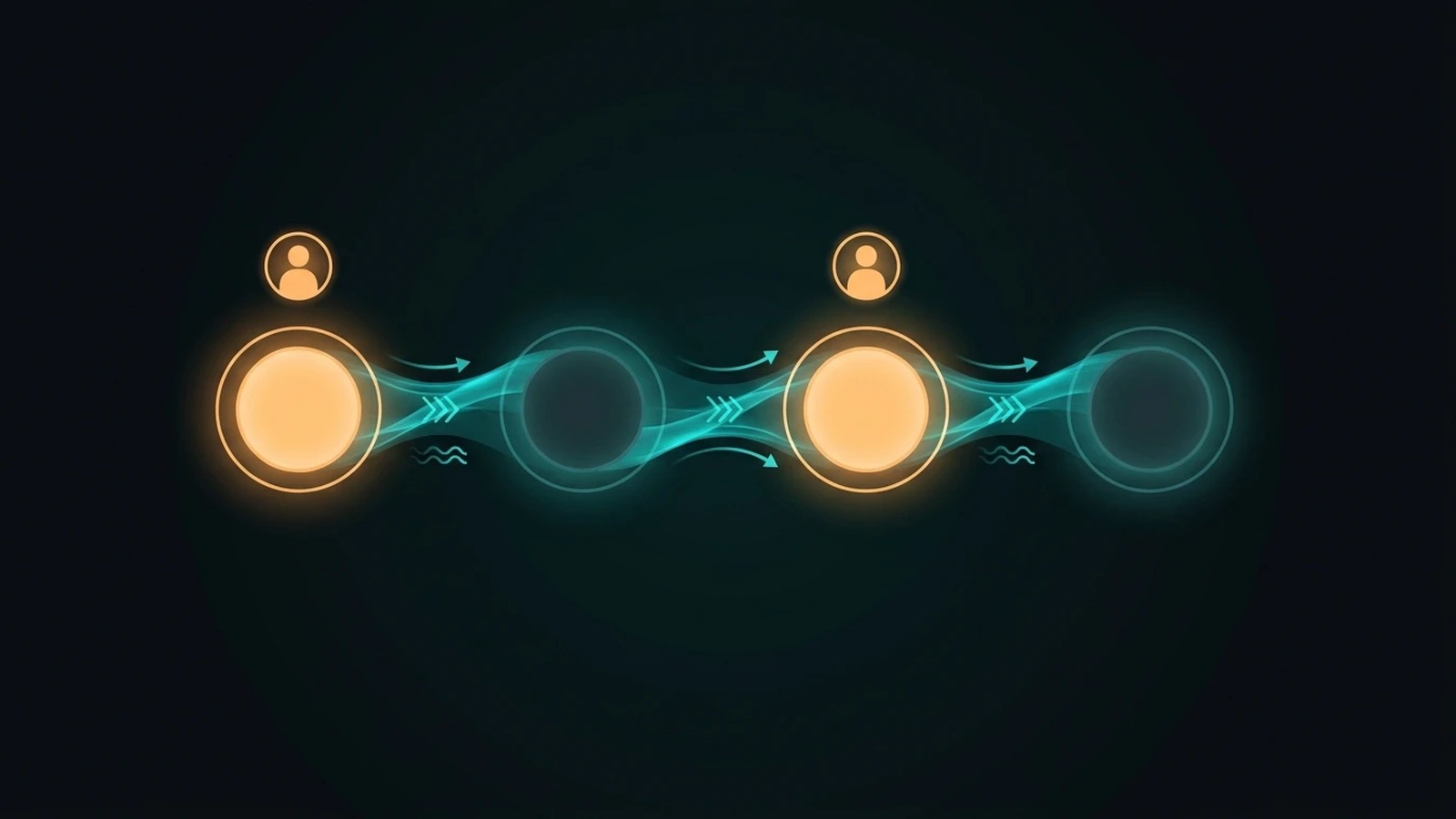
In hiring specifically, that’s the difference between a single sign-off bolted onto the end of an AI-run process and a workflow built with the checkpoint inside it from the start. myndQ’s hr.myndq.ai runs multi-round AI interview and assessment workflows with a human decision point built into the pipeline rather than added on afterward — closer to what Article 14 is actually asking for than a checkbox at the finish line.
The Checkpoint Is the Product
The organizations that will be fine on August 3rd, and every day after, aren’t the ones running the least AI. They’re the ones that can point to a specific step in a specific workflow and say, provably, a person was there — not as a formality, but because that step is where a wrong call actually lands on someone’s job, application, or paycheck.
The gap between the law and the practice won’t close because more companies read Article 14 carefully. It closes the way any workflow gap closes: by someone actually mapping where the checkpoints are, then building the system so skipping one takes more effort than keeping it.
Sources
- JumpCloud, Q3 2026 IT Trends Report: AI Agents Are Entering Critical Workflows. Who’s Governing Them? (July 2026)
- Deloitte, The State of AI in the Enterprise, 8th edition (January 2026)
- Grant Thornton, 2026 AI Impact Survey
- World Economic Forum, Future of Jobs Report 2025
- European Commission, Regulation (EU) 2024/1689 (EU AI Act), Articles 14 and 26 — deployer human oversight duties, applicable from August 2, 2026
Explore how myndQ builds the checkpoint into the workflow itself: hr.myndq.ai for the human-in-the-loop hiring pipeline, or talent.myndq.ai for the verified-skills record candidates build on the other side of it.